
A roller shade valance is a simple cover that hides the roller and hardware at the top of your window. It finishes the window, adds light control, and brings a bit of style to the room. Pick the wrong type or fit, though, and it can look bulky, block the shade, or waste your money. This guide walks you through types, fit, and installation step by step. We compare each option neutrally and show where it works best, with Unitec Blinds as your reference for measuring and product guidance.
1 What A Roller Shade Valance Does
Form, Function, And Benefits
Think of a roller shade valance as a tidy cover for the top of your window. It hides the headrail, the roller, and the mounting hardware, so the finished window looks clean instead of mechanical. That cover does more than dress things up. It blocks the light gap at the top of the window, gives the room a finished style, and shields the shade mechanism from dust and everyday bumps.
Most valances stay small on purpose. A typical roller shade valance runs about 2 to 4 inches tall, just enough to wrap the headrail. Actual sizes vary by collection, though. Common headrail heights across popular lines include 1 1/2″, 2″, 2 1/4″, 3 1/4″, 3 1/2″, and 3 7/8″, while larger fascia styles reach 4″ to 5 3/8″. Here’s a quick look:
| Style Group | Typical Height Range |
|---|---|
| Standard collections | 1 1/2″ to 3 7/8″ |
| Larger fascia styles | 4″ to 5 3/8″ |
When A Valance Makes Sense
A valance earns its place when hardware sits exposed or a room needs a finishing touch. It also helps when you want the window treatment to coordinate with your décor. A simple cassette can be enough on its own, especially in tight spaces where a slim profile matters. So weigh the look you want against the clearance you have.
Unitec Blinds offers the URS series and the DP series, both available in manual or motorized options. Either system pairs well with a valance, and the right match depends on your window and your taste.
2 Choosing The Right Valance For Your Roller Shade
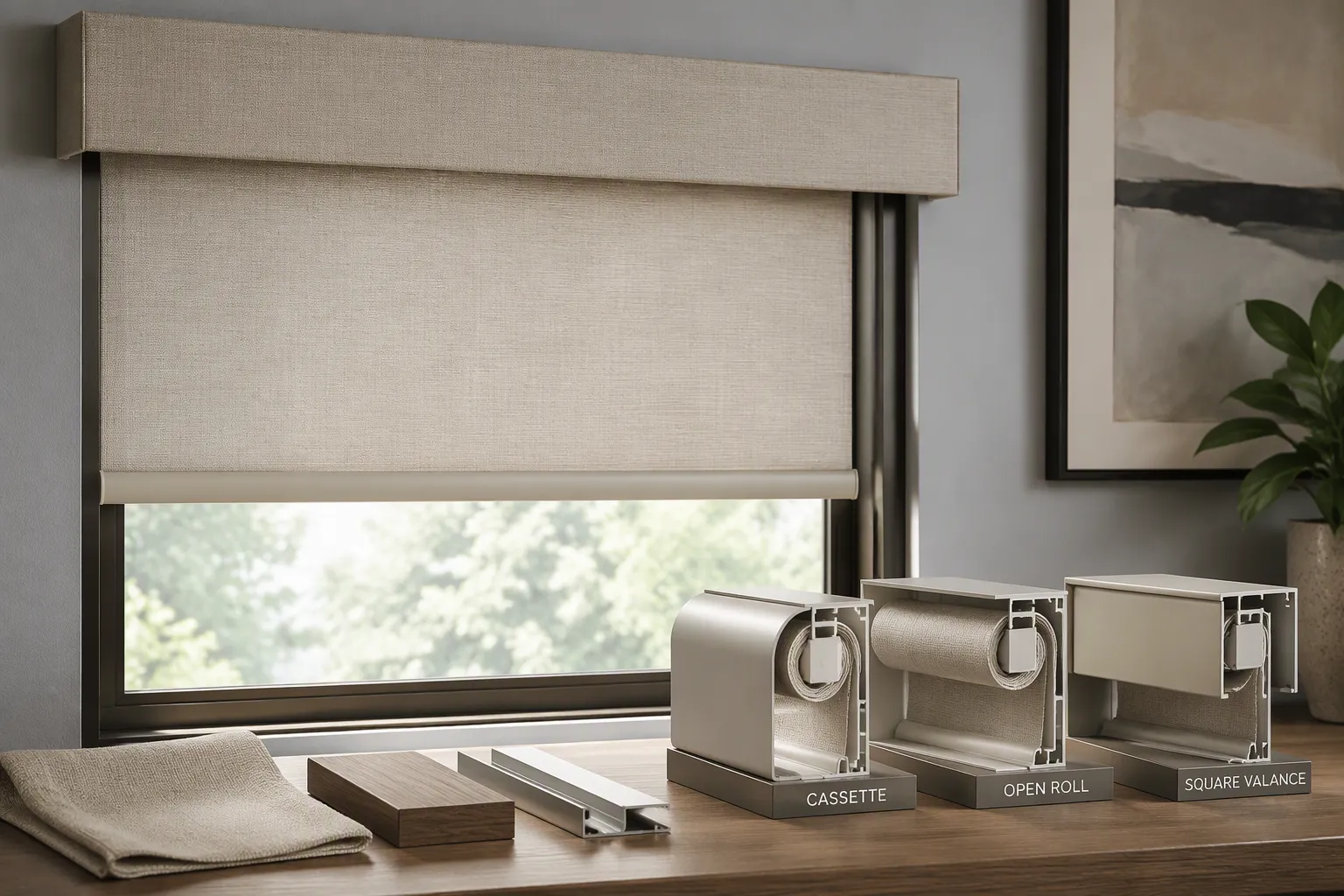
Fabric, Wood, And Aluminum Options
Start with the material, because it shapes both the look and the upkeep. A fabric valance is usually an aluminum fascia wrapped in fabric. That build gives you a softer, more casual feel, and it suits living rooms and bedrooms well. A custom fabric valance lets you pull a color or texture straight from your décor, so the window feels intentional rather than added on.
Wood and metal bring a more structured, formal appearance. Aluminum deserves a closer look here. An aluminum valance offers durability and style, with a smooth finish for a high-end architectural look. It resists corrosion, so it holds up in high-humidity spots like kitchens or bathrooms. It’s lightweight yet strong, long-lasting, and easy to install.
Cassette, Open Roll, And Square Styles
Style decides how the top of the window reads. Common valance types include the fabric-wrapped cassette, the open roll, and the square valance. Here’s where each style tends to fit best:
| Room Type | Suitable Valance Styles |
|---|---|
| Offices | Contemporary/minimalist; elegant office; smart-home/minimalist |
| Bedrooms | Elegant styles |
| Living Rooms | Elegant styles; statement-window styles |
3 Getting The Right Valance For Your Roller Shade
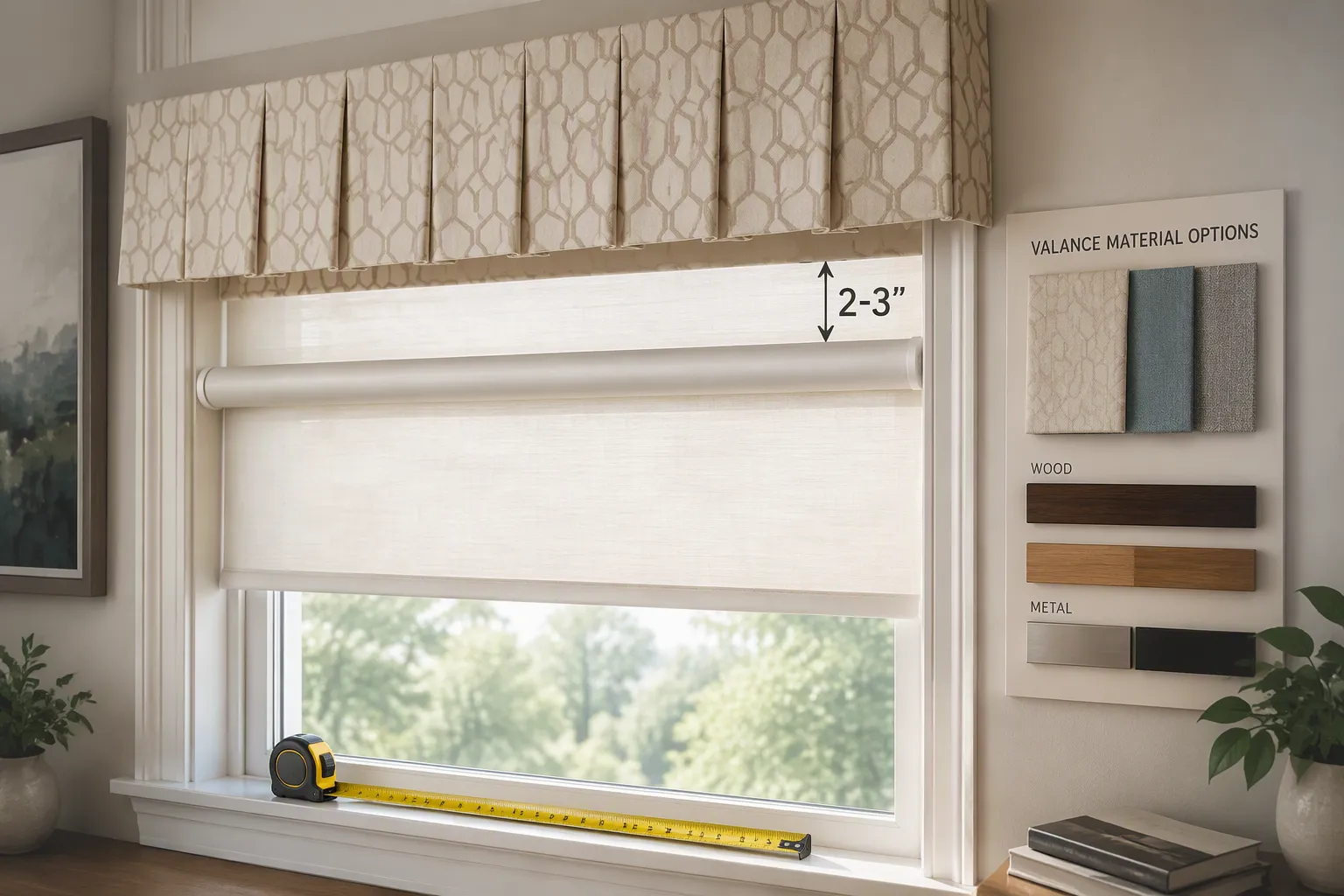
Matching Style, Shade, And Window
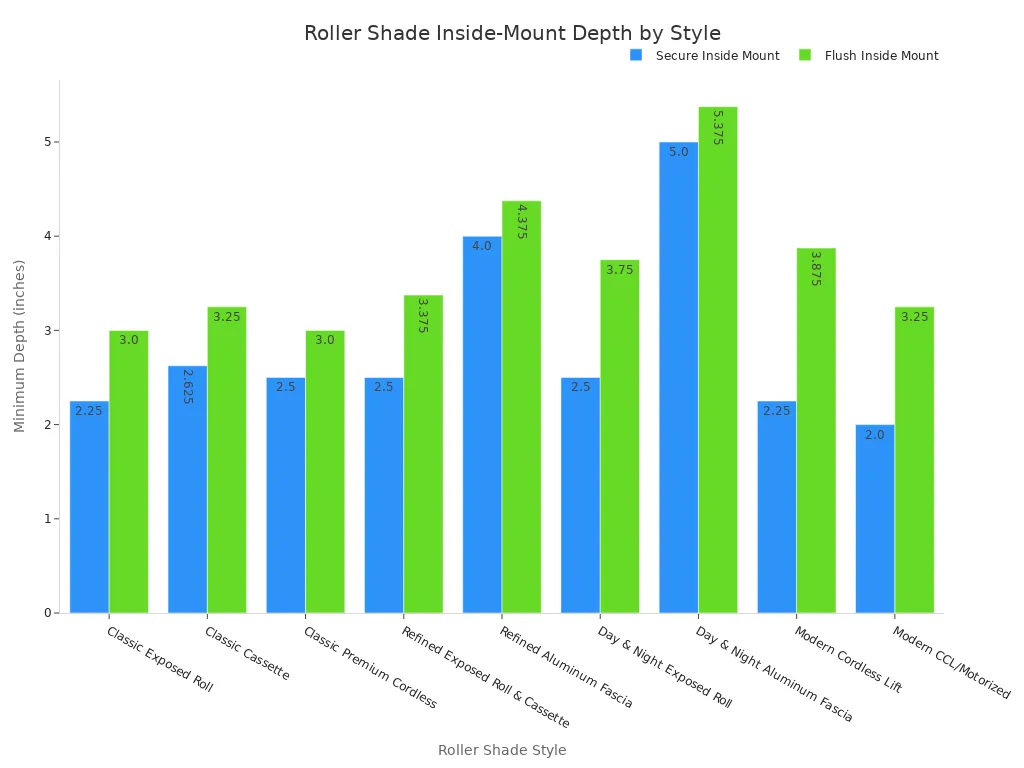
Next, check shade compatibility. Hardware that sits proud of the frame needs extra room. A good rule is 2–3 inches between the bottom of the valance and the top of the blind headrail. Inside-mount depth matters most, and it changes with the shade style:
| Roller Shade Style | Min. Depth (Secure) | Min. Depth (Flush) |
|---|---|---|
| Classic (Exposed Roll) | 2 1/4″ | 3″ |
| Classic (Cassette) | 2 5/8″ | 3 1/4″ |
| Refined/Architect (Fascia) | 4″ | 4 3/8″ |
| Day & Night Double Roller | 5″ | 5 3/8″ |
Colors For My Valance And Blind Pairing
A neutral valance is a safe, stylish choice. For double roller shades, metal valances come in white, silver, or black. Texture counts as much as color. A rich fabric valance fabric, like natural linen, warms up sleek blinds. Sheer or textured fabrics suit minimalist looks.
4 Installing Valances With Blinds
Tools, Steps, And Mounting Tips
- Mark the bracket positions and check them with a level.
- Mount the brackets into the wall or frame.
- Slide the cassette valance over the shade assembly.
- Push in the tabs to secure the valance in place.
- Check clearance and test the shade.
Fixes For Fit And Alignment Issues
If one side sags, loosen the bracket screws and nudge the bracket up or down. Inspect the full travel path for obstructions like a window crank. Skip improvised fixes like coins or folded paper. Unitec Blinds product pages can confirm compatibility for manual and motorized roller shades.
Quick Selection Checklist:
- [Type] Fabric for a softer look, wood or metal for a formal one.
- [Fit] Match width to headrail and confirm inside-mount depth.
- [Install] Mount shade first, keep level, and leave room for fabric.
Measure twice, choose the valance that suits your window, and explore Unitec Blinds for options.
Frequently Asked Questions
How tall should a roller shade valance be?
Most roller shade valances run about 2 to 4 inches tall — just enough to cover the headrail. Match the valance width exactly to the headrail width.
Can I add a valance to motorized blinds?
Yes. A valance pairs fine with manual or motorized blinds. Unitec Blinds’ URS and DP series both work with a valance.
What color valance works with most blinds?
A neutral valance is the safe pick. For double roller shades, metal valances come in white, silver, or black, with the bottom bar color-matched.
Do I need a valance if my shade has a cassette?
Not always. A cassette already covers the roller. Add one when you want a softer fabric look or a more finished window.
How do I know my window has enough depth for a valance?
Check the minimum inside-mount depth for your shade style. Unitec Blinds’ product pages list the depth each series requires.
Post time: Oct-17-2026